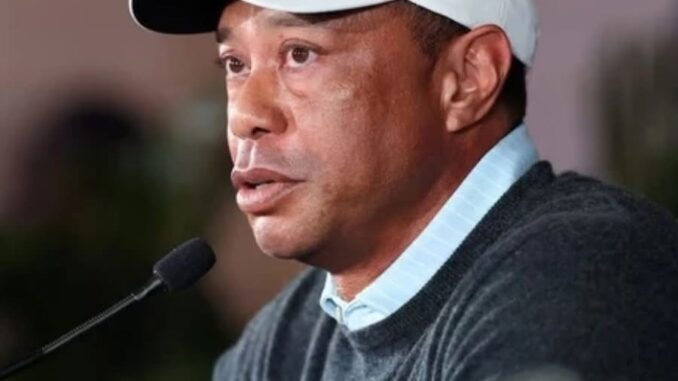
Golf legend Tiger Woods has reportedly made what many insiders are calling an “inevitable” decision regarding his involvement in the upcoming Ryder Cup—and it’s already sending waves through the golf world.
After months of speculation surrounding his physical condition and competitive future, Woods has opted not to pursue an active playing role for Team USA. While the decision may disappoint fans hoping to see the 15-time major champion back in Ryder Cup action, it comes as little surprise given his ongoing recovery struggles and limited appearances on the PGA Tour in recent seasons.
Despite stepping away from playing duties, Woods is far from absent. Sources close to the situation suggest he is strongly considering—or has already accepted—a leadership position behind the scenes, potentially as a vice-captain. His unmatched experience, strategic mind, and deep understanding of Ryder Cup pressure make him an invaluable asset off the course.
The PGA of America has publicly backed Woods’ decision, emphasizing that his influence extends well beyond swinging a club. In a supportive statement, the organization highlighted his legacy, leadership, and the inspiration he continues to provide to both seasoned players and rising stars.
Woods’ history with the Ryder Cup is complex. While his individual performances have at times been scrutinized, his presence has always elevated Team USA’s profile. More importantly, his mentorship in recent years has proven vital, especially during Team USA’s resurgence in the competition.
Many current American players, including stars like Scottie Scheffler and Jordan Spieth, have previously spoken about Woods’ impact in the locker room—crediting his guidance, calmness under pressure, and competitive mindset as key factors in their development.
At this stage of his career, Woods appears to be embracing a transition from competitor to mentor. While fans may miss the iconic fist pumps and clutch moments on the fairways, his presence could be even more powerful in shaping the team’s strategy and morale.
The decision ultimately reflects realism and respect—for both his body and the demands of elite-level golf. And while it may mark the end of an era for Woods as a Ryder Cup player, it also signals the beginning of a new chapter—one where his legacy continues to grow in a different, yet equally impactful way.
As anticipation builds for the next Ryder Cup, one thing is certain: even without a club in hand, Tiger Woods will still be one of the most influential figures in the competition.
Leave a Reply